
What a thermal scan shows (and what it doesn’t)
A plain-English guide to the Thermpix thermography scan we use in Yandina, how it works and why we re-scan as you progress.
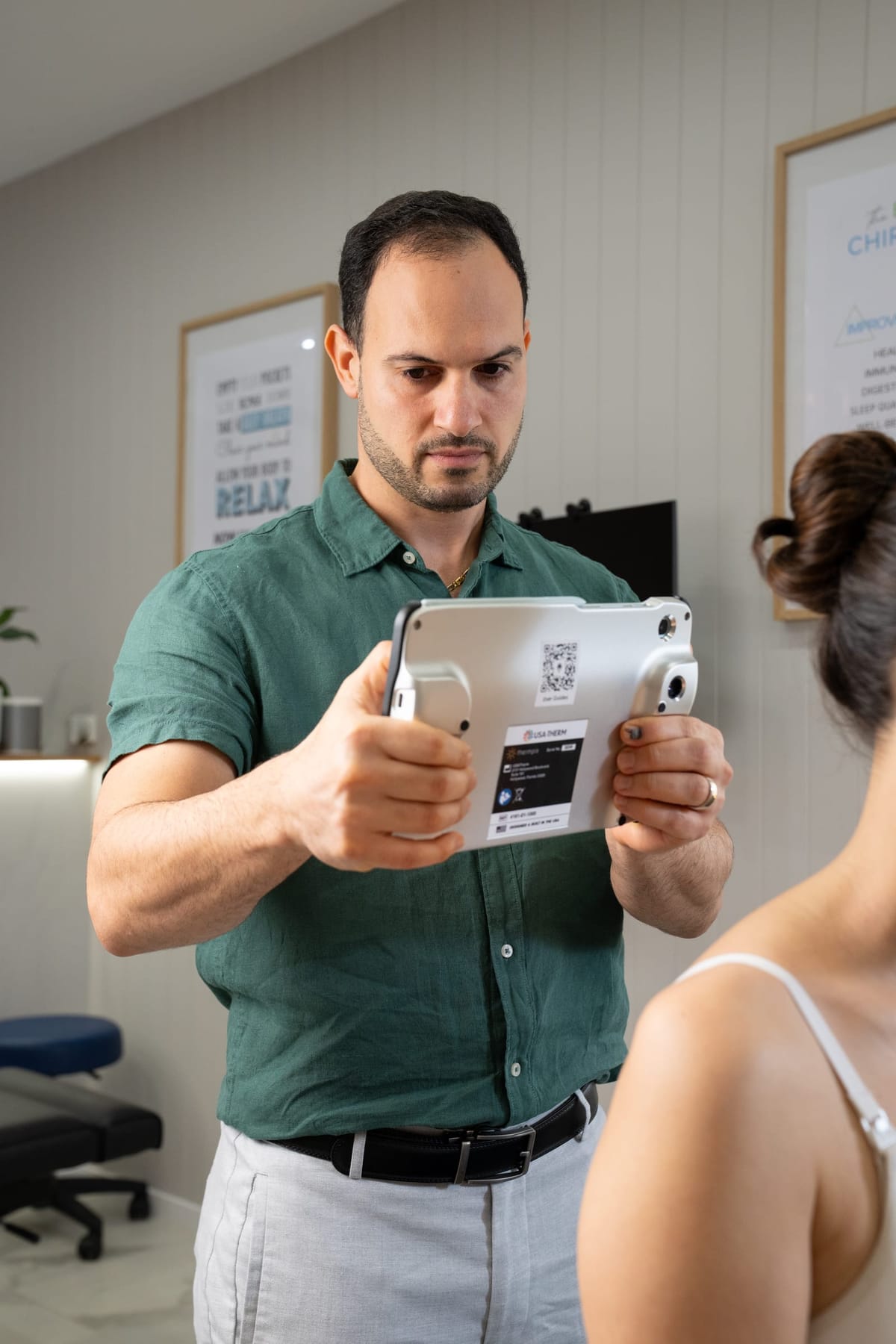
One of the first things new patients ask about is the tablet-style camera we hold up to their back. It’s our Thermpix thermography scanner, and it plays a big part in how we start your care.
How it works
Everything gives off heat. A thermal camera captures that heat as an image, with warmer areas showing as reds and yellows and cooler areas as greens and blues.
When we scan your spine, we’re looking for patterns and asymmetries: areas that are noticeably warmer than the surrounding tissue or the same area on the other side. Integrated AI analysis helps highlight those hotspots, which can suggest areas of stress and inflammation.
The scan is quick, nothing touches you, and there’s no radiation. It’s suitable for all ages, including kids and during pregnancy.
Why we use it
Symptoms are often the last thing to appear and the first thing to disappear. An area can be under stress before it hurts, and can still be under stress after the pain eases. The scan gives us an objective starting point, so your care is based on measurement rather than guesswork.
Why we scan again
We re-scan at regular progress checks and compare results over time. That helps us see whether your care is doing what it should, and adjust it if not. Many people find it reassuring to see the change, not just feel it.
What it doesn’t do
Thermography is not a stand-alone diagnostic test, and it doesn’t replace medical tests. We always interpret it together with your history, a physical examination and any imaging. If anything suggests you need medical assessment, we’ll refer you to your GP.
See it for yourself
Every new patient assessment at our clinic includes a thermal scan. Read more about thermography or book a consultation.
This article is general information only and isn’t a substitute for advice about your own health. If you have severe, worsening or unusual symptoms, please see your GP. Individual results vary.