
Tech neck: simple fixes for desk and phone posture
Hours on phones and laptops add up. Here are practical, realistic changes to take pressure off your neck and upper back.
Look around any café on the Sunshine Coast and you’ll see it: heads tipped forward, shoulders rounded, eyes on a screen. We do it for hours a day, and our necks notice.
Why screens are hard on your neck
Your head weighs around 5 kilograms. When it sits balanced over your shoulders, your neck carries that load easily. As your head drifts forward to look down at a phone or lean into a laptop, the muscles at the back of your neck and upper back work much harder to hold it up.
Do that for a few minutes and you won’t notice. Do it for hours a day, every day, and it can contribute to stiffness, aching between the shoulder blades and tension-type headaches.
Set up your desk in five minutes
- Screen height: the top of your screen at about eye level, roughly an arm’s length away.
- Laptop users: raise the laptop on a stand or a stack of books and use a separate keyboard and mouse.
- Chair: feet flat, hips slightly higher than knees, and your lower back supported.
- Keyboard and mouse: close enough that your elbows stay by your sides.
Phone habits that help
- Bring the phone up to your eyes rather than your eyes down to the phone.
- Use voice-to-text for longer messages.
- Set a reminder to put the phone down and look up every 20 minutes.
Two quick exercises
Chin tucks: sit tall and gently draw your chin straight back, as if making a double chin. Hold for 3 seconds and repeat 10 times.
Doorway chest stretch: place your forearms on either side of a doorway and lean gently forward until you feel a stretch across your chest. Hold for 20–30 seconds.
Stop any exercise that causes sharp pain, pins and needles or dizziness.
When it’s more than a stiff neck
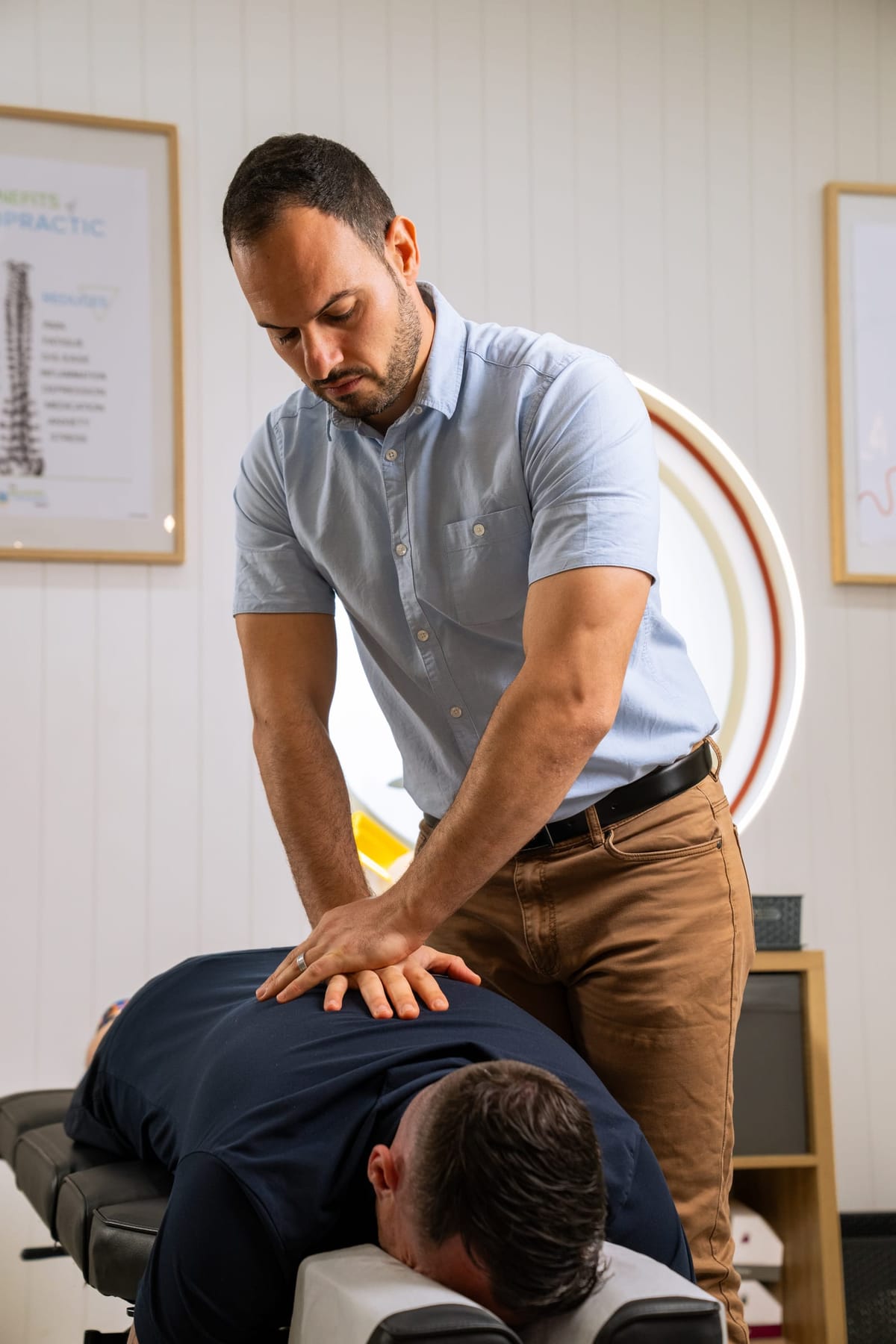
If neck pain keeps returning, comes with headaches, or spreads into your shoulder or arm, it’s worth getting it assessed. We look at how your neck and upper back are moving and use a thermal scan to show where your body is under the most stress.
Learn more about neck pain care or book online.
This article is general information only and isn’t a substitute for advice about your own health. If you have severe, worsening or unusual symptoms, please see your GP. Individual results vary.